Selected judgments.
Practical significance.
CRUX Insights is designed for serious reading: the holding, practical significance, a practitioner note and the underlying judgment source. The collection spans the firm’s principal practice areas and will evolve with the law.
Case-story visual system: each motion follows the facts, legal issue and result of its specific judgment rather than using generic practice imagery.
Technology, AI & Judicial Process
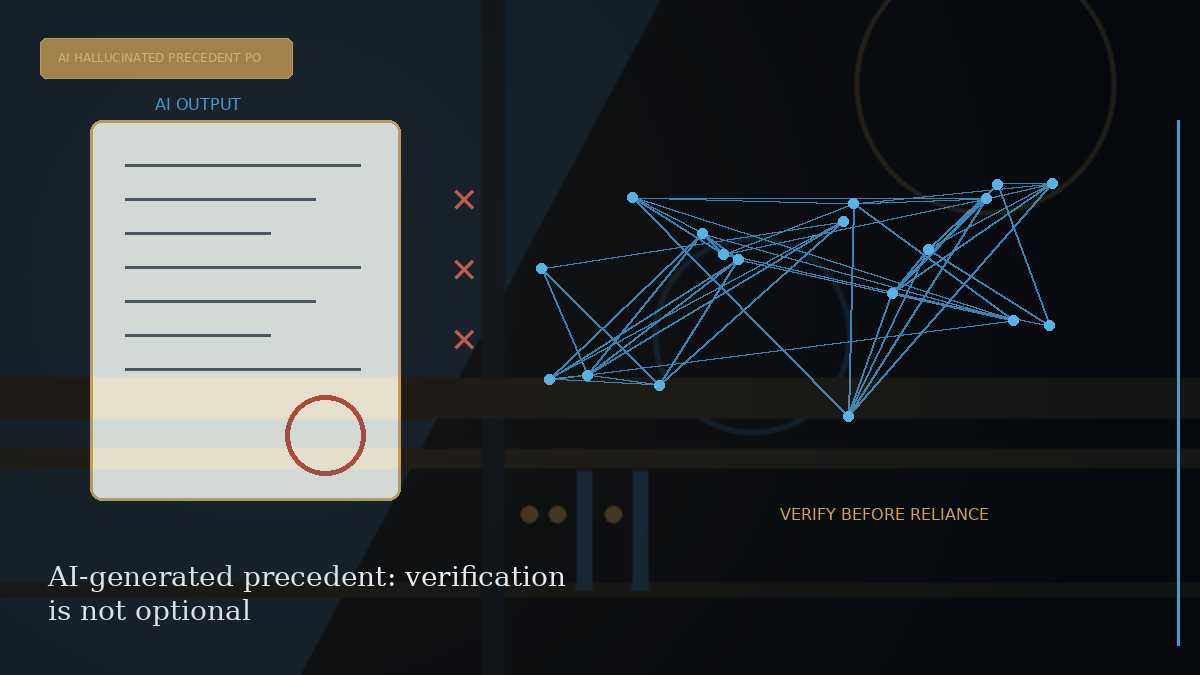
AI-generated precedent: verification is not optional
The Supreme Court set aside NCLT and NCLAT decisions after fake or hallucinated citations entered the adjudicatory process, and adopted a zero-tolerance approach to unverified AI-generated precedent.
Pooja Ramesh Singh v. Jammu and Kashmir Bank Ltd.
2026 INSC 668 · 2 July 2026
Read case brief →
Corporate & M&A
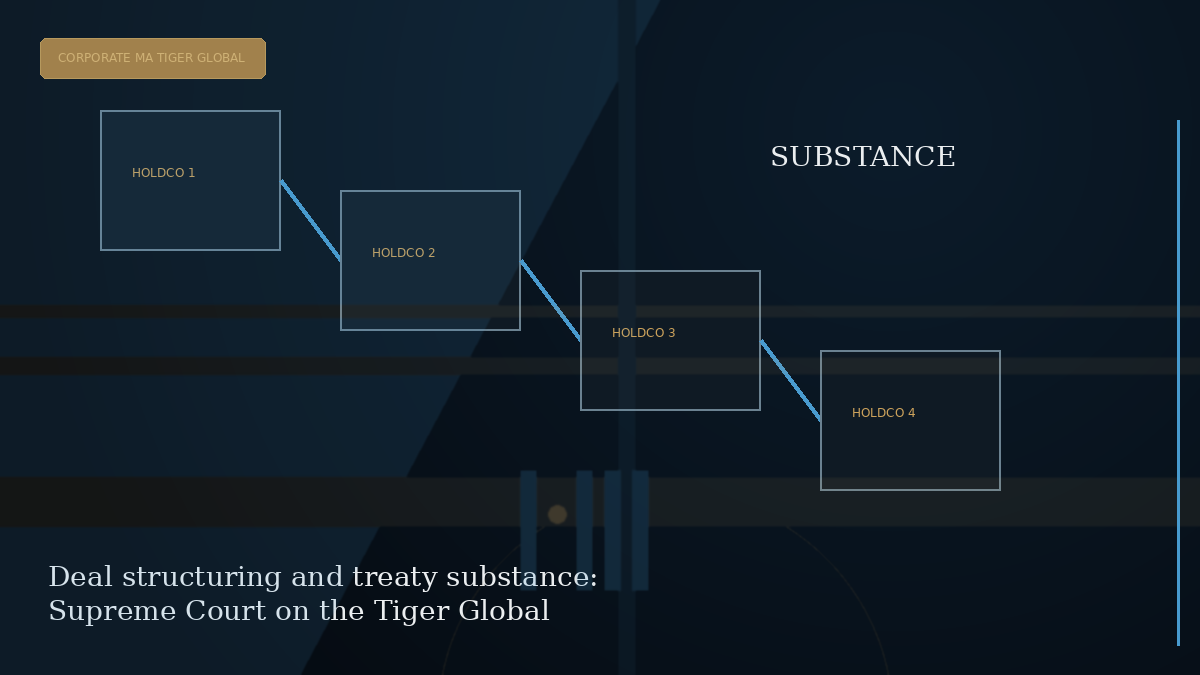
Deal structuring and treaty substance: Supreme Court on the Tiger Global transaction
The Court examined the treaty and statutory framework governing the transaction and the availability of treaty protection in a cross-border exit structure. The decision is significant for transaction structuring because tax consequences turn on the governing legal framework and the substance evidenced by the record, not labels alone.
Authority for Advance Rulings (Income Tax) & Ors. v. Tiger Global International II Holdings & Ors.
2026 INSC 60 · 15 January 2026
Read case brief →Commercial Litigation
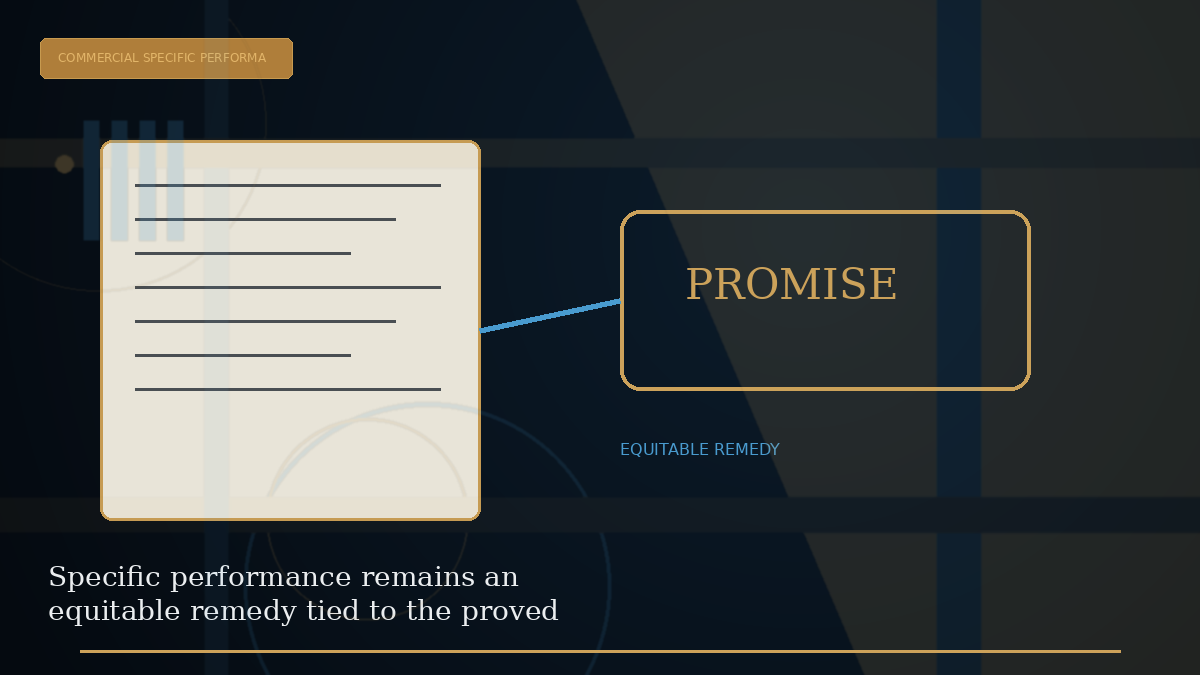
Specific performance remains an equitable remedy tied to the proved bargain
The Supreme Court dealt with a long-running agreement-to-sell dispute and the plaintiff’s entitlement to specific performance, including the requirement of proving readiness and willingness. The Court declined to mechanically restore specific performance and moulded equitable relief on the proved record.
Subhash Aggarwal v. Mahender Pal Chhabra & Anr.
2026 INSC 11 · 5 January 2026
Read case brief →Writ & Constitutional Law
Public power, public resources and the discipline of Article 14
The Court reiterated that exercise of public power and allocation of public resources remain subject to constitutional discipline, fairness and transparency. In considering the plea for an independent investigation, it focused on legality, institutional confidence and the Article 14 character of State action.
Save Mon Region Federation & Anr. v. State of Arunachal Pradesh & Ors.
2026 INSC 320 · 6 April 2026
Read case brief →Arbitration & Dispute Resolution
Seat and venue are not interchangeable: supervisory jurisdiction follows the juridical seat
The Supreme Court revisited the distinction between the juridical seat and the physical venue of arbitration when determining which court exercises supervisory jurisdiction over a challenge to the award.
J&K Economic Reconstruction Agency v. Rash Builders India Private Limited
2026 INSC 368 · 15 April 2026
Read case brief →Real Estate & Property
Land-acquisition appeals: limitation, appellate route and a justice-oriented approach
In a large batch of land-acquisition appeals, the Court clarified the appellate route under Section 74 of the 2013 Act and held that the Limitation Act is not excluded. It also directed a pragmatic approach to condonation while emphasising administrative accountability for delay.
The Deputy Commissioner and Special Land Acquisition Officer v. M/s S.V. Global Mill Limited
2026 INSC 138 · 9 February 2026
Read case brief →Banking, Finance & DRT
DRT jurisdiction is powerful, but it does not absorb every antecedent title dispute
The Supreme Court examined the scope of the remedy under Section 17 of the SARFAESI Act and the boundary between DRT jurisdiction and civil-court adjudication where antecedent title and the validity of underlying documents are in issue.
Central Bank of India & Anr. v. Smt. Prabha Jain & Ors.
2025 INSC 95 · 9 January 2025
Read case brief →Restructuring, Insolvency & NCLT
IBC is not a substitute for ordinary debt recovery
The Court examined whether the asserted transaction satisfied the statutory character of financial debt for a Section 7 proceeding and reiterated the distinction between insolvency resolution and using the Code as a mere recovery device.
Anjani Technoplast Ltd. v. Shubh Gautam
2026 INSC 410 · 23 April 2026
Read case brief →White-Collar & Investigations
Enforcement cases turn on the statutory scheme, charge and legally operative schedule
The Supreme Court addressed prosecution under the NDPS Act in relation to psychotropic substances, the interaction between the Act and Rules, the effect of precedent, and the consequences of the legally operative charging framework.
Directorate of Revenue Intelligence v. Raj Kumar Arora & Ors.
2025 INSC 498 · 17 April 2025
Read case brief →Criminal Litigation
Bail orders must engage with the material factors, not merely recite general principles
The Court scrutinised the grant of bail against material circumstances including allegations of abscondence, threats to witnesses and the evidentiary record, reiterating that a bail order must demonstrate application of mind to factors relevant to the particular case.
Mohseen v. State of Uttar Pradesh & Anr.
2026 INSC 526 · 22 May 2026
Read case brief →Civil Litigation
The economic value of domestic care cannot be treated as invisible
In motor-accident compensation, the Supreme Court recognised the economic, managerial and caregiving contribution of a homemaker and addressed systemic delay in claims adjudication.
Shishu Pal @ Shish Ram & Ors. v. Surjeet & Ors.
2026 INSC 634 · 11 June 2026
Read case brief →Employment & Labour
Pending judicial proceedings can matter to the timing of terminal benefits
The Court interpreted the applicable pension rules and held that pending judicial proceedings operated as a bar to release of gratuity in the circumstances before it, notwithstanding the status of departmental proceedings.
Bikram Chand Rana v. Himachal Pradesh Road Transport Corporation
2026 INSC 326 · 7 April 2026
Read case brief →Taxation
Section 74 GST notices need foundational facts—not copy-pasted allegations
The Supreme Court held that the extended Section 74 route cannot be sustained by mechanically repeating expressions such as fraud, wilful misstatement or suppression. The notice must contain foundational facts capable of supporting the statutory allegation; a protective demand cannot cure a limitation problem.
M/s Tata Steel Limited v. Union of India through the Secretary, Ministry of Finance & Ors.
2026 INSC 920 · 25 August 2026
Read case brief →Intellectual Property
Trade mark comparison is about the mark as encountered in the market
The Court revisited overall similarity, anti-dissection, dominant features, trade dress and equitable considerations governing interim relief in trade mark infringement and passing-off disputes.
Pernod Ricard India Private Limited & Anr. v. Karanveer Singh Chhabra
2025 INSC 981 · 14 August 2025
Read case brief →SRA & Slum Redevelopment
SRA redevelopment rights: Supreme Court protects the landowner’s preferential right to redevelop
The Supreme Court clarified the statutory sequence for redevelopment of a Slum Rehabilitation Area: the private landowner’s preferential right must be respected through notice and opportunity before acquisition can be pursued, while the scheme remains directed to rehabilitation of eligible occupants.
Saldanha Real Estate Private Limited v. Bishop John Rodrigues & Ors. and connected appeals
2025 INSC 1016 · 22 August 2025
Read case brief →Maritime & Shipping
Customs custody and statutory port functions: Supreme Court clarifies responsibility for imported goods
The Supreme Court considered the legal relationship between customs control and statutory port functions in a dispute concerning imported goods and liability arising from pilferage while the goods were within the customs area.
Union of India & Ors. v. Board of Trustees of the Port of Bombay
2026 INSC 919 · 25 August 2026
Read case brief →Private Client, Family & Succession
Probate is not a closed room: interested parties and suspicious circumstances matter
The Court examined revocation of probate, participation of persons claiming an interest in the estate, proof of the Will and suspicious circumstances under the succession and evidence framework.
S. Leorex Sebastian & Anr. v. Sarojini & Ors.
2026 INSC 400 · 21 April 2026
Read case brief →Constitutional Law
The Constitution may be amended, but its basic structure cannot be destroyed
Parliament's amending power is wide, but it does not extend to altering the basic structure or identity of the Constitution.
His Holiness Kesavananda Bharati Sripadagalvaru v. State of Kerala
1973 Supp SCR 1 · 24 April 1973
Read case note →
Judicial Review
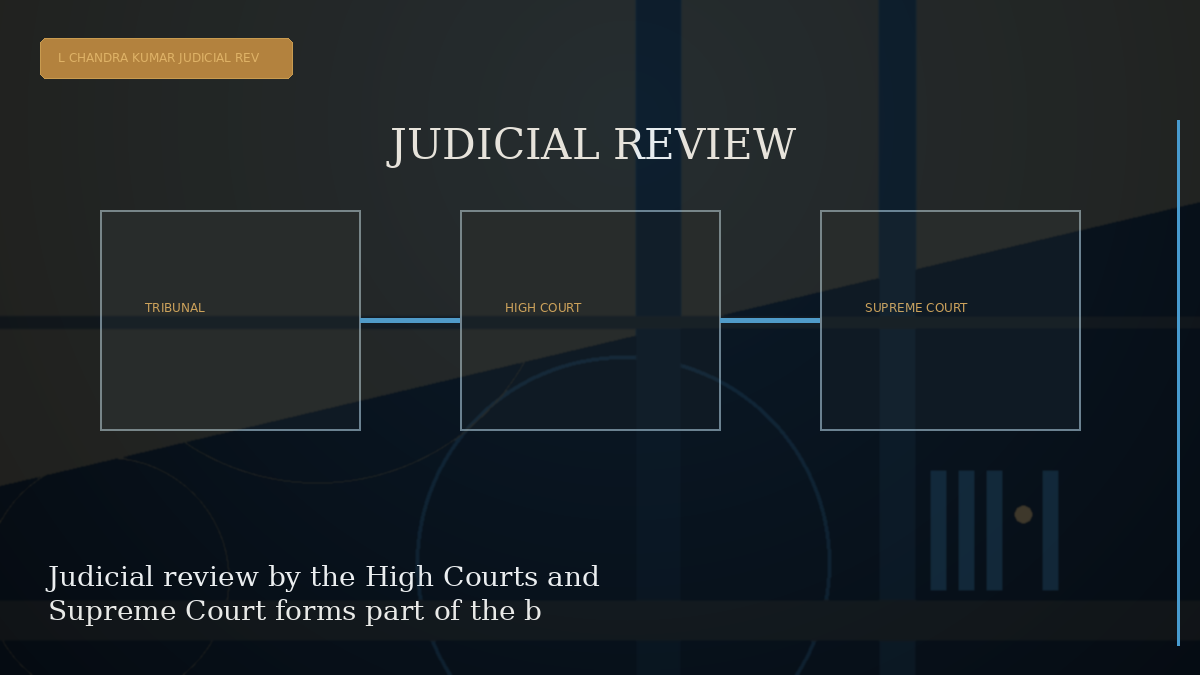
Judicial review by the High Courts and Supreme Court forms part of the basic structure
Tribunals may perform a specialised adjudicatory role, but they cannot exclude the constitutional judicial-review jurisdiction of the High Courts and Supreme Court.
L. Chandra Kumar v. Union of India
(1997) 3 SCC 261 · 18 March 1997
Read case note →
Constitutional Law
Procedure affecting liberty must be fair, just and reasonable
Article 21 is not satisfied by the mere existence of a procedure: the procedure affecting life or personal liberty must meet constitutional standards of fairness and non-arbitrariness.
Maneka Gandhi v. Union of India
(1978) 1 SCC 248 · 25 January 1978
Read case note →
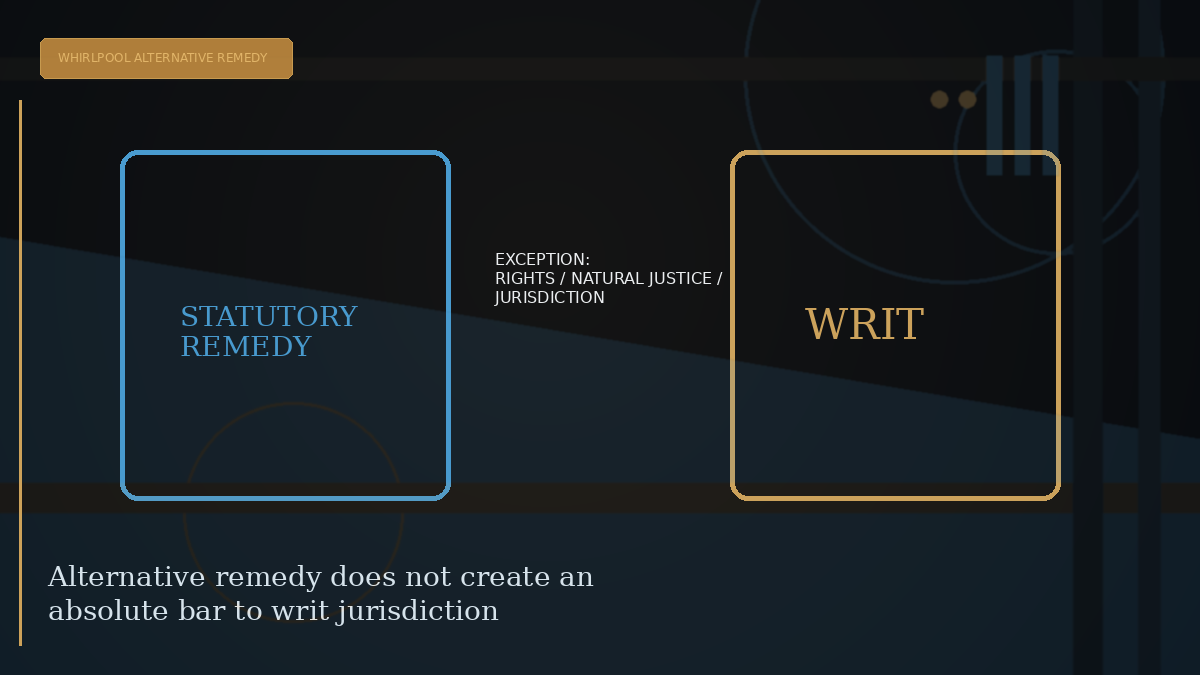
Writ Jurisdiction
Alternative remedy does not create an absolute bar to writ jurisdiction
The rule of alternative remedy is a rule of judicial restraint, not a rigid jurisdictional prohibition.
Whirlpool Corporation v. Registrar of Trade Marks, Mumbai
(1998) 8 SCC 1 · 26 October 1998
Read case note →
Administrative Law
A public order must stand or fall on the reasons recorded in it
An administrative or statutory order cannot ordinarily be improved later through fresh reasons supplied in affidavits or litigation.
Mohinder Singh Gill & Anr. v. Chief Election Commissioner
(1978) 1 SCC 405 · 2 December 1977
Read case note →
Commercial Litigation
Forfeiture and liquidated damages remain tied to the law of compensation
Section 74 does not convert every contractual sum into an automatic windfall; compensation must remain legally supportable on the facts and the nature of the breach.
Kailash Nath Associates v. Delhi Development Authority
(2015) 4 SCC 136 · 9 January 2015
Read case note →
Civil Procedure
Civil procedure is intended to manage disputes efficiently, not multiply delay
The CPC amendments and Section 89 framework were sustained with guidance aimed at effective case management, costs and alternative dispute resolution.
Salem Advocate Bar Association, Tamil Nadu v. Union of India
(2005) 6 SCC 344 · 2 August 2005
Read case note →
Commercial Litigation
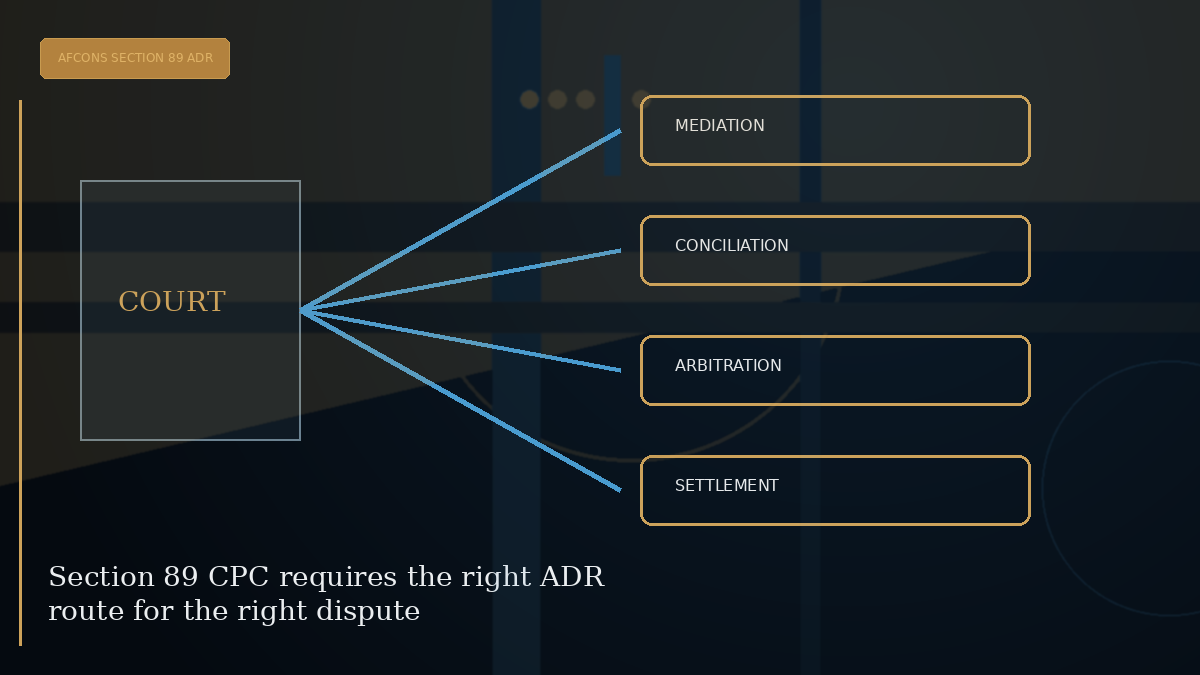
Section 89 CPC requires the right ADR route for the right dispute
A court may facilitate ADR under Section 89, but reference to arbitration cannot be imposed without the legal basis and consent required for arbitration.
Afcons Infrastructure Ltd. & Anr. v. Cherian Varkey Construction Co. (P) Ltd.
(2010) 8 SCC 24 · 2010
Read case note →
Arbitration
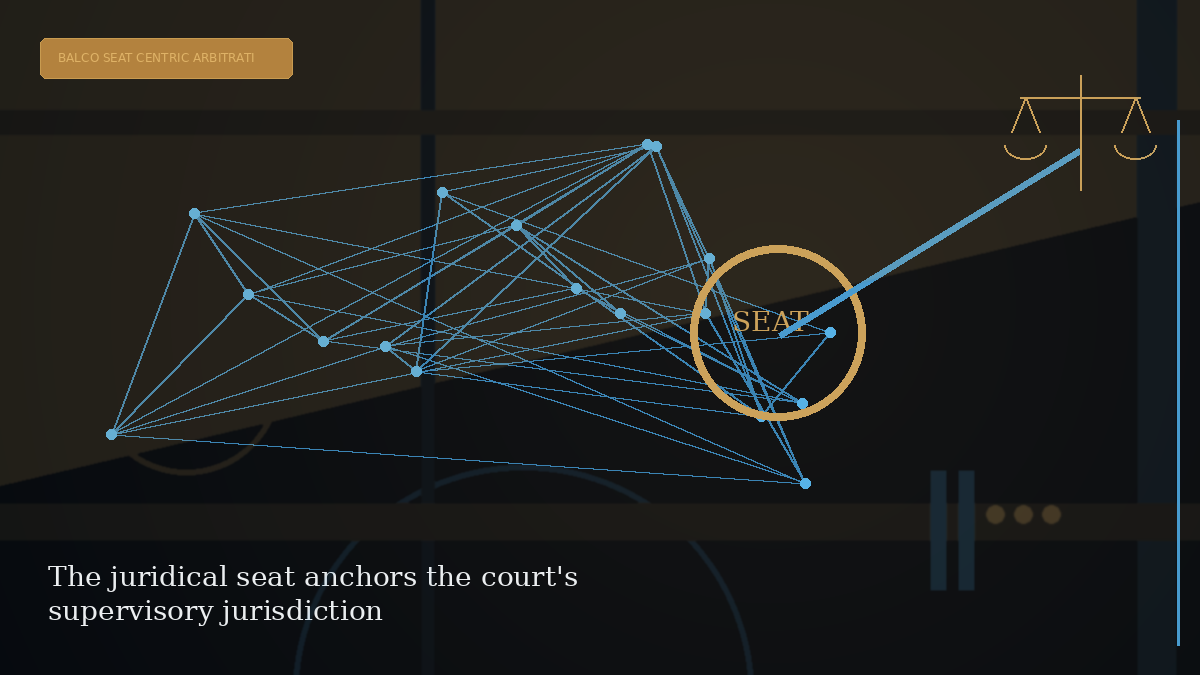
The juridical seat anchors the court's supervisory jurisdiction
BALCO placed the territoriality principle at the centre of the Arbitration and Conciliation Act and distinguished the legal significance of the seat from the physical venue.
Bharat Aluminium Co. v. Kaiser Aluminium Technical Services Inc.
(2012) 9 SCC 552 · 6 September 2012
Read case note →
Arbitrability
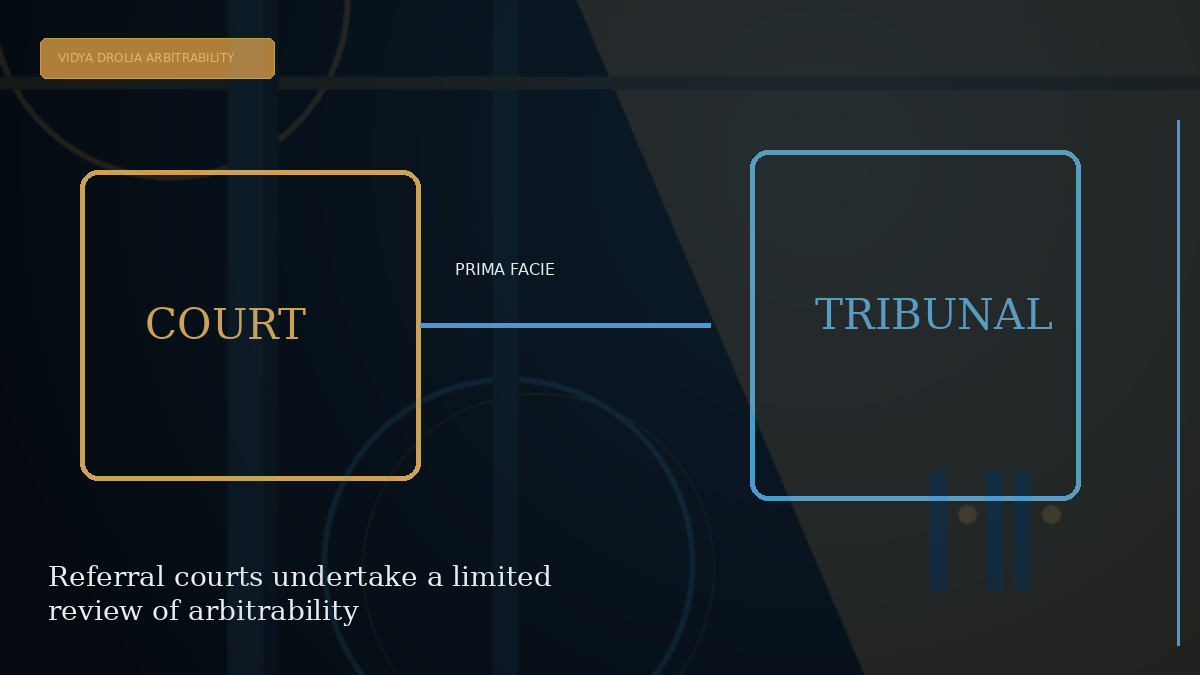
Referral courts undertake a limited review of arbitrability
At the referral stage the court generally conducts a prima-facie examination, leaving contested issues to the arbitral tribunal unless non-arbitrability is manifest.
Vidya Drolia & Ors. v. Durga Trading Corporation
14 December 2020
Read case note →
Arbitration
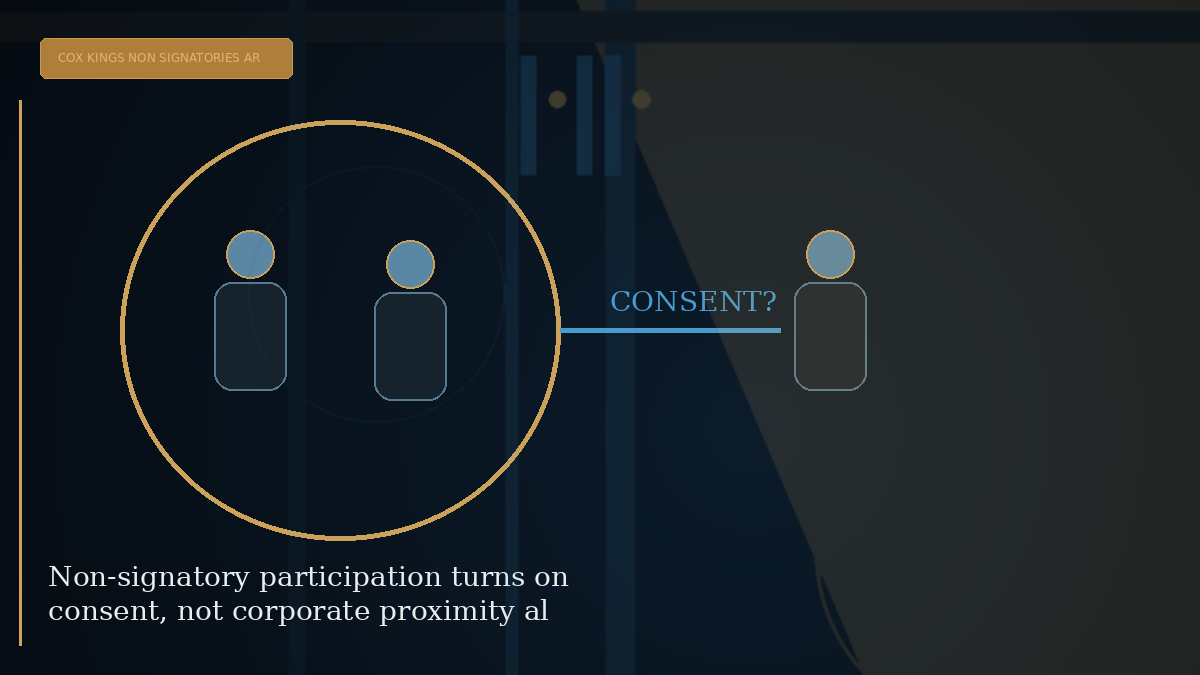
Non-signatory participation turns on consent, not corporate proximity alone
The Group of Companies doctrine survives in Indian arbitration law, but its application is rooted in determining the parties' intention to be bound.
Cox and Kings Ltd. v. SAP India Pvt. Ltd. & Anr.
6 December 2023
Read case note →
Corporate & M&A
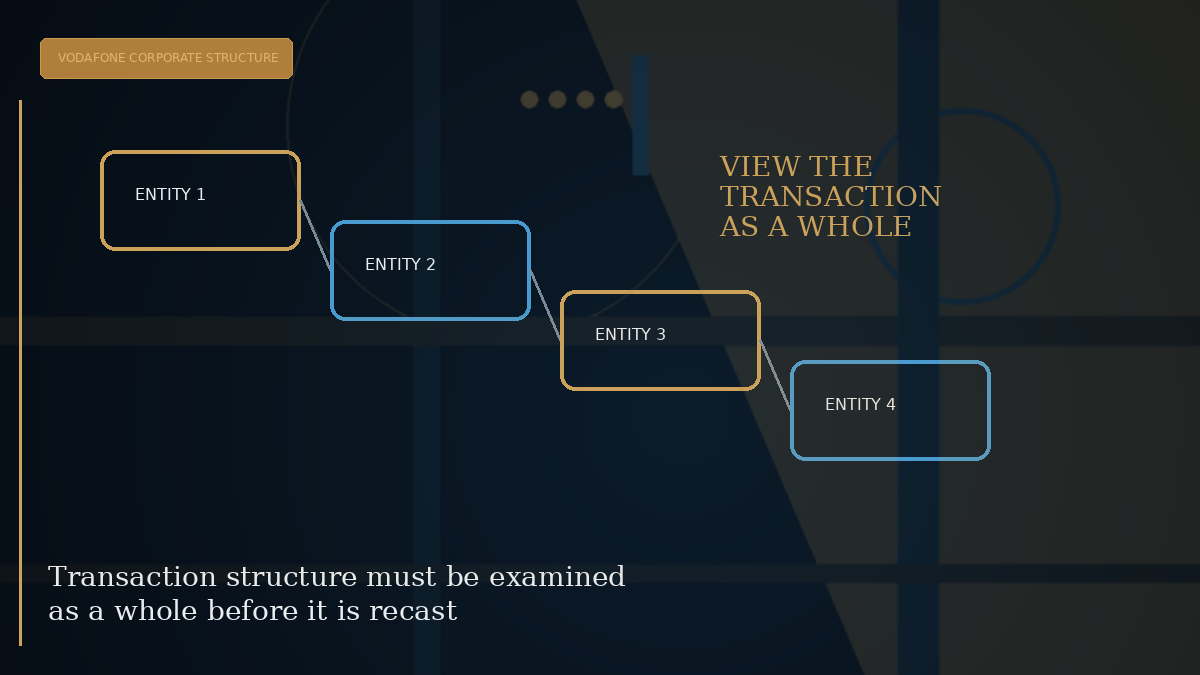
Transaction structure must be examined as a whole before it is recast
The legal character of a genuine corporate transaction cannot be displaced merely by looking through its form without the statutory and factual basis to do so.
Vodafone International Holdings B.V. v. Union of India & Anr.
(2012) 6 SCC 613 · 20 January 2012
Read case note →
Securities & Markets
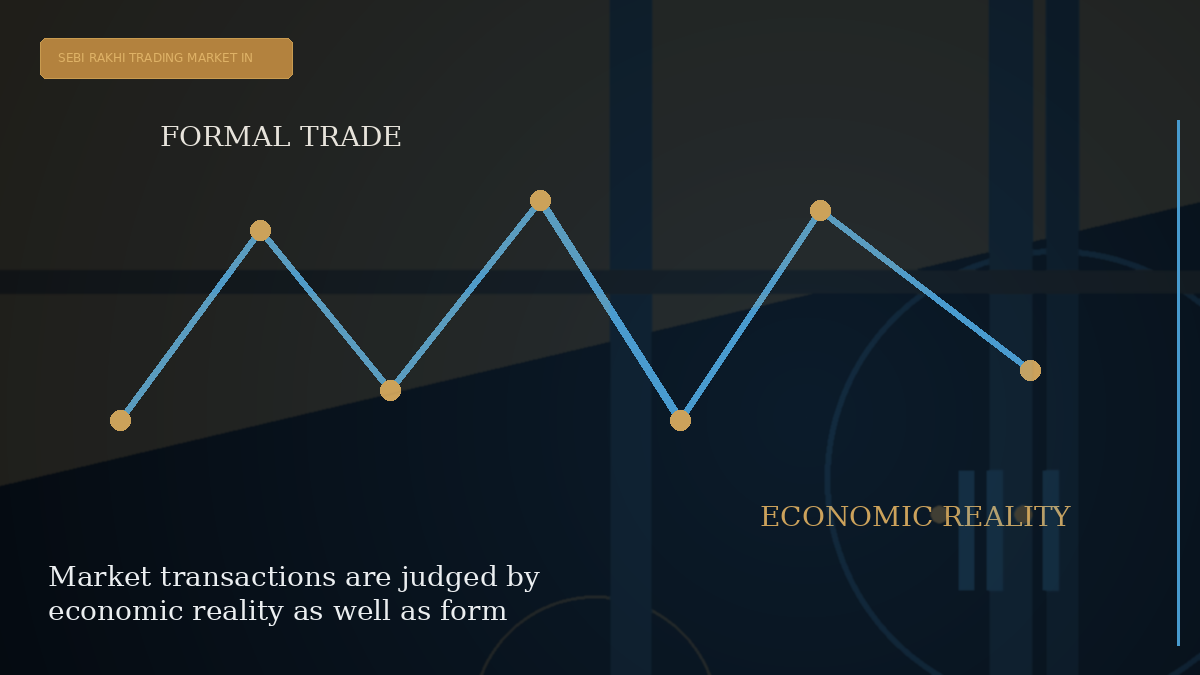
Market transactions are judged by economic reality as well as form
Artificial or synchronised transactions capable of creating a misleading appearance of trading can attract securities-law consequences even where their mechanics appear formally matched.
Securities and Exchange Board of India v. Rakhi Trading Pvt. Ltd.
8 February 2018
Read case note →
Corporate Governance
Corporate power must be exercised for a proper purpose and assessed in its commercial setting
Share issues, director conduct and allegations of oppression require close attention to purpose, fairness and the actual effect of corporate action.
Needle Industries (India) Ltd. & Ors. v. Needle Industries Newey (India) Holding Ltd. & Ors.
(1981) 3 SCC 333 · 7 May 1981
Read case note →
Insolvency & Restructuring
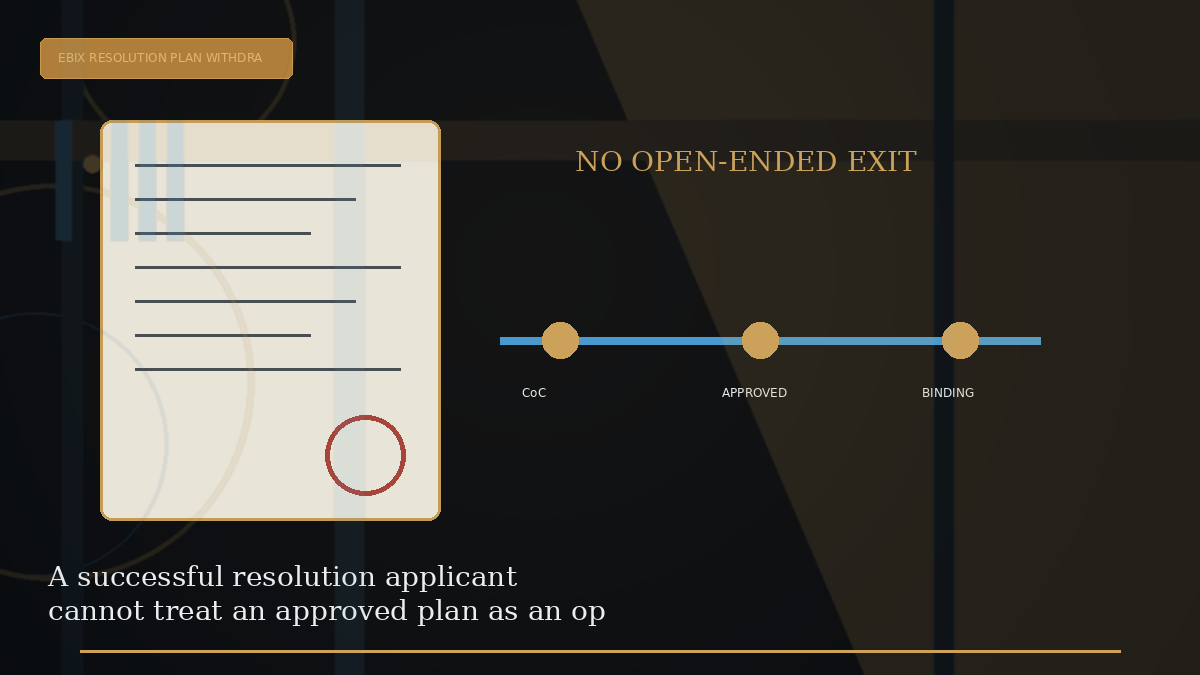
A successful resolution applicant cannot treat an approved plan as an open-ended option
The IBC's time-bound architecture and the binding nature of the resolution process leave no general power for unilateral withdrawal of a plan after CoC approval.
Ebix Singapore Private Limited v. Committee of Creditors of Educomp Solutions Limited
13 September 2021
Read case note →
Insolvency & NCLT
Section 7 focuses the admission inquiry on financial debt and default
For a financial-creditor application, the adjudicating authority examines whether a financial debt exists and whether default has occurred within the statutory framework.
Innoventive Industries Ltd. v. ICICI Bank & Anr.
(2018) 1 SCC 407 · 31 August 2017
Read case note →
Insolvency & NCLT
A genuine pre-existing dispute can stop an operational-creditor insolvency trigger
Section 9 is not a substitute for adjudicating a real commercial dispute: the tribunal asks whether a plausible pre-existing dispute exists, not whether the debtor will ultimately win it.
Mobilox Innovations Private Limited v. Kirusa Software Private Limited
(2018) 1 SCC 353 · 21 September 2017
Read case note →
Banking & Recovery
SARFAESI created a powerful recovery mechanism, but statutory power remains reviewable
The Supreme Court substantially upheld the SARFAESI framework while invalidating the then-existing pre-deposit condition that operated as an oppressive barrier to challenge.
Mardia Chemicals Ltd. & Ors. v. Union of India & Ors.
(2004) 4 SCC 311 · 2004
Read case note →
Banking & DRT
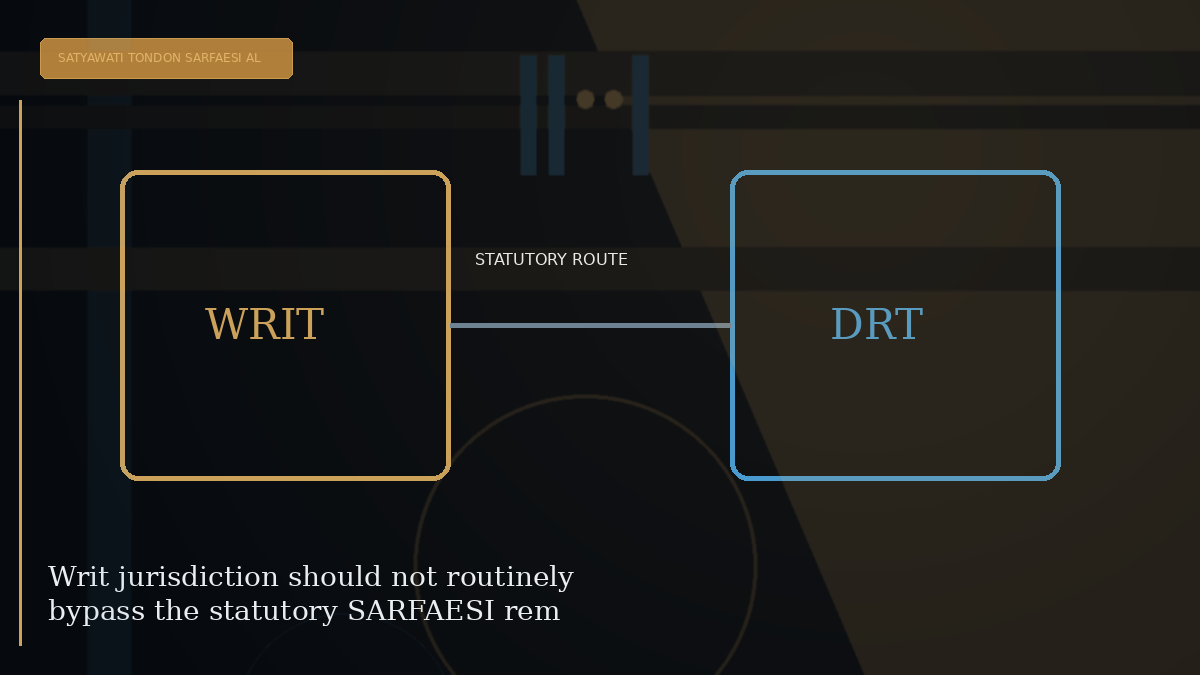
Writ jurisdiction should not routinely bypass the statutory SARFAESI remedy
Where the recovery statute supplies an effective specialist remedy, High Courts should ordinarily insist that the statutory route be used before invoking Article 226.
United Bank of India v. Satyawati Tondon & Ors.
(2010) 8 SCC 110 · 2010
Read case note →
Real Estate
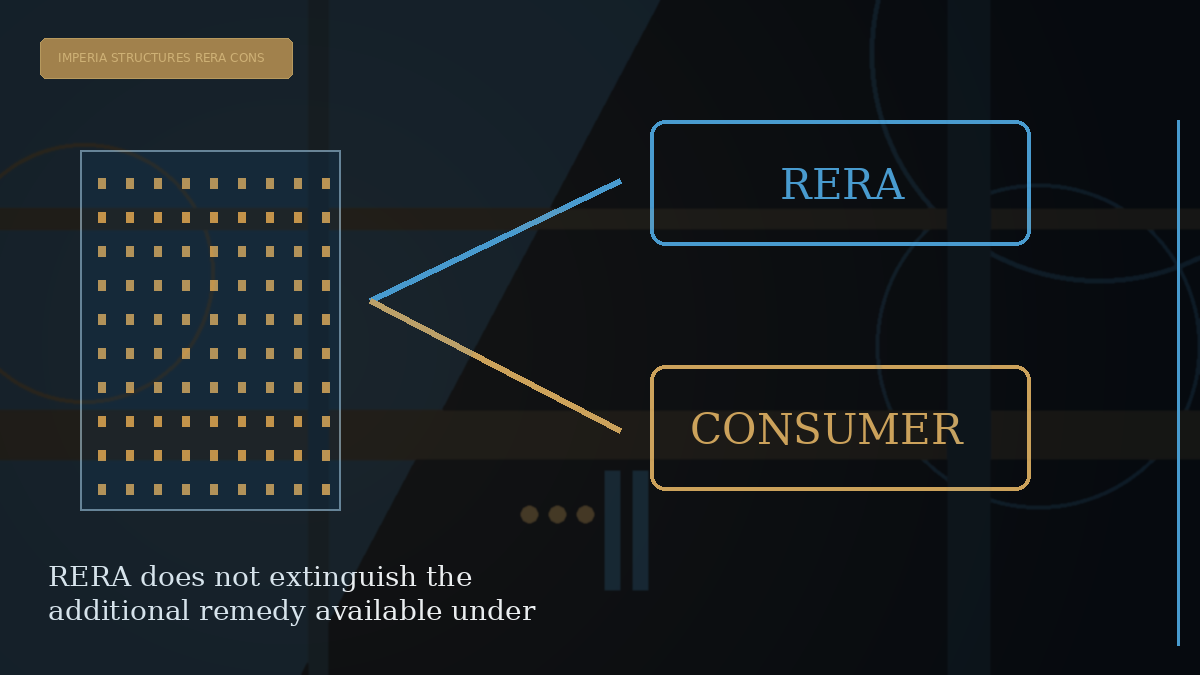
RERA does not extinguish the additional remedy available under consumer law
The availability of a remedy under RERA does not by itself oust a homebuyer's statutory consumer remedy.
Imperia Structures Ltd. v. Anil Patni & Anr.
2 November 2020
Read case note →
Property & Planning
Hardship cannot become a licence to preserve unauthorised construction
Planning law loses meaning if serious violations of sanctioned plans are routinely regularised after construction.
Esha Ekta Apartments Co-operative Housing Society Ltd. v. Municipal Corporation of Mumbai
(2013) 5 SCC 357 · 2013
Read case note →
Real Estate
One-sided builder terms do not erase the homebuyer's substantive remedies
Contractual clauses drafted by a developer cannot be applied mechanically where delay, unfairness and the statutory consumer framework point to effective relief.
Ireo Grace Realtech Pvt. Ltd. v. Abhishek Khanna & Ors.
(2021) 3 SCC 241 · 11 January 2021
Read case note →
Municipal & Development Law
Planning permissions and completion controls are rule-of-law safeguards
Unauthorised construction cannot be normalised through administrative inaction; planning authorities have continuing obligations to enforce sanctioned development.
Rajendra Kumar Barjatya & Anr. v. U.P. Avas Evam Vikas Parishad & Ors.
2024 INSC 990 · 17 December 2024
Read case note →
Municipal & Development Law
Courts should not convert unauthorised construction into a claim for equitable regularisation
Where construction is unauthorised, judicial discretion cannot be used to defeat the planning regime merely because demolition will cause hardship.
Kaniz Ahmed v. Sabuddin & Ors.
2025 INSC 610 · 30 April 2025
Read case note →
Development & Planning
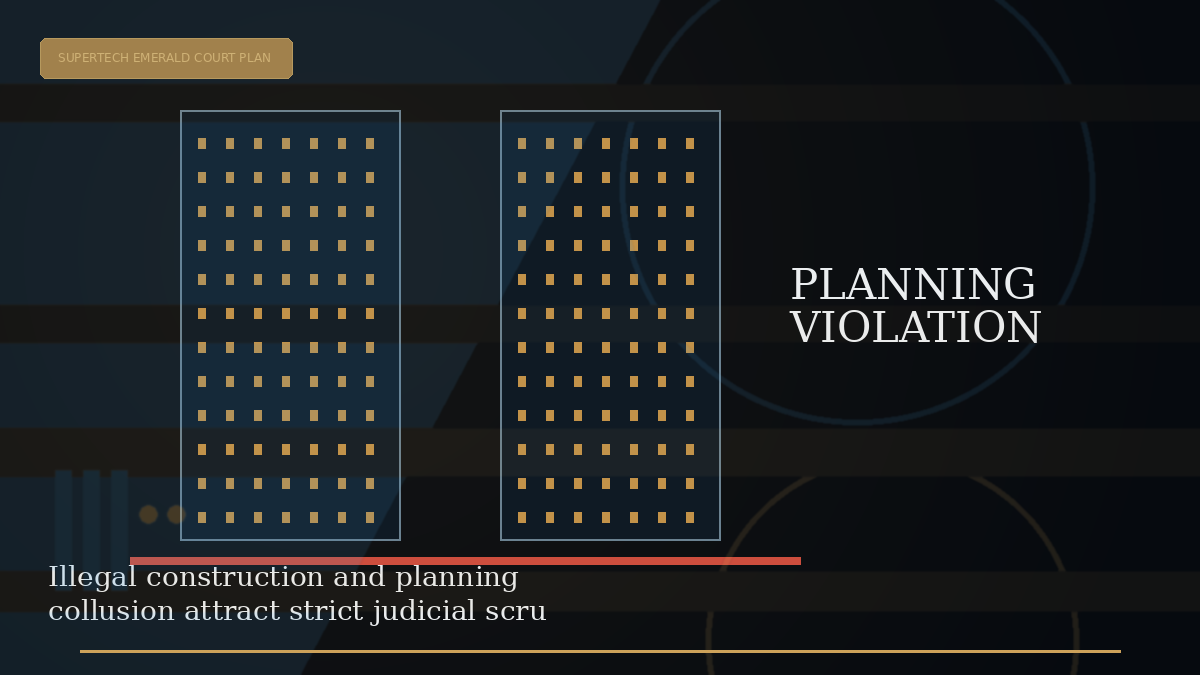
Illegal construction and planning collusion attract strict judicial scrutiny
Development permission must comply with planning law, building regulations and the rights affected by the sanctioned plan; collusion cannot cure illegality.
Supertech Limited v. Emerald Court Owner Resident Welfare Association & Ors.
(2021) 10 SCC 1 · 31 August 2021
Read case note →
White-Collar & Investigations
Grounds of arrest are a substantive safeguard, not an administrative formality
The power to arrest under the PMLA carries procedural safeguards that must be meaningfully observed; an arrestee must be enabled to know the grounds on which liberty is taken away.
Pankaj Bansal v. Union of India & Ors.
2023 INSC 866 · 3 October 2023
Read case note →
Employment & Labour
The meaning of 'industry' turns on the nature of the activity, not the label of the institution
The Industrial Disputes Act looks to the character and organisation of the activity when deciding whether an undertaking falls within the statutory concept of an industry.
Bangalore Water-Supply & Sewerage Board v. R. Rajappa & Ors.
(1978) 2 SCC 213 · 21 February 1978
Read case note →
Private Client & Succession
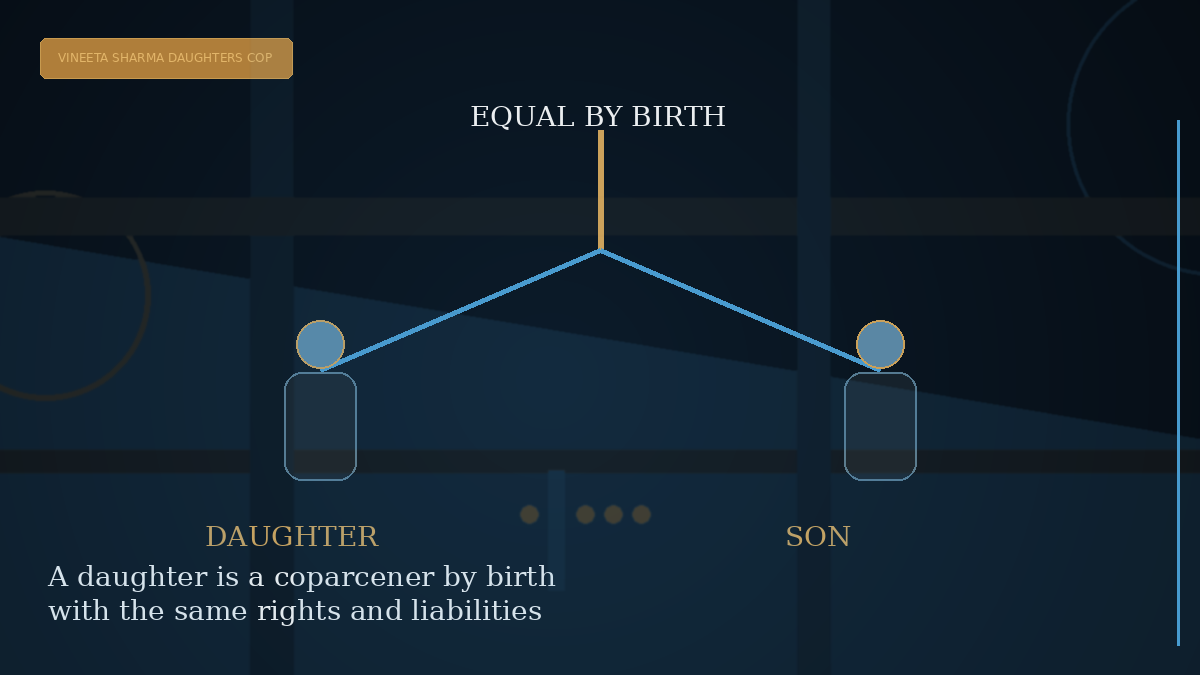
A daughter is a coparcener by birth with the same rights and liabilities as a son
The substituted Section 6 of the Hindu Succession Act confers coparcenary status on daughters by birth; the father's survival on the amendment date is not a condition for the right.
Vineeta Sharma v. Rakesh Sharma & Ors.
(2020) 9 SCC 1 · 11 August 2020
Read case note →
Technology & Digital Evidence
Electronic evidence: authenticity must be proved through the statutory route
Section 65B governs proof of computer outputs and reinforces the need to preserve a legally verifiable source for electronic material.
Arjun Panditrao Khotkar v. Kailash Kushanrao Gorantyal & Ors.
(2020) 7 SCC 1 · 14 July 2020
Read case note →